How to write a poem about nature (without producing another greeting-card sunset)
Someone asked me last week why so many nature poems sound the same. I gave the honest answer: because most people write about nature from memory instead of from attention. You sit at a desk, you picture "a beautiful meadow," and out comes a beautiful meadow. Nobody has ever seen a beautiful meadow. They've seen a dead sparrow half-buried in gravel, or a sycamore leaf stuck to a wet bench, or fog swallowing a phone tower.
The fastest way to write a poem about nature that actually lands is to stop describing nature and start recording what it did to you, in the exact moment you noticed it. Everything else — rhyme, meter, form — comes after. Get the attention right first.
Key Takeaways
- Write from a specific observed moment, not from the general idea of "nature."
- Your opening line should contain a concrete noun you could photograph.
- Pick a form that fits your material: haiku for a single instant, rhyme for readers who want music.
- Revision is mostly subtraction. Cut every adjective your noun already implies.
- Read the poem out loud before you call it finished. Your ear catches what your eye forgives.
- Keep a pocket notebook. Seven to ten lines a day is enough raw material for a poem every week.
Start with one real thing you actually saw
Here's the rule I'd defend in an argument: one observed detail beats five invented ones. If you didn't see it, don't write it. Readers can smell a fabricated landscape from the first line, and they close the tab.
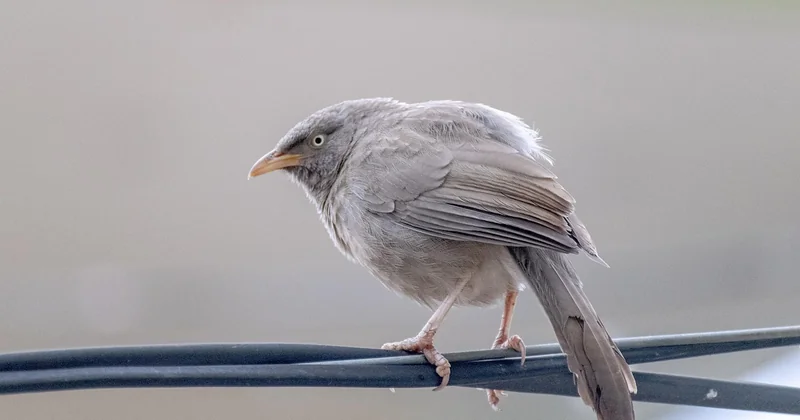
So before you write anything, go outside for ten minutes with no phone. Not a walk. A sit. Pick something small enough to watch completely: a spider repairing a web, ice melting off a gutter, ants dragging a dead moth across pavement. Watch until something about it surprises you. That surprise is your poem.
What to record while you watch
Don't write poetry yet. Write notes, badly. I keep a torn envelope in my coat pocket for this and it has produced more usable lines than any notebook app.
- The exact movement — "the crow shifted its weight twice before it dropped"
- What it sounded like — not "birdsong" but "a single note, then nothing for a long time"
- What you felt that had nothing to do with the scenery (impatience, grief, hunger)
- A comparison that arrived before you could censor it
- The one thing you can't name. Leave it in the notes unlabelled.
Why does this matter? Because nature poetry fails when it's generic and succeeds when it's unrepeatable. "The trees were tall" describes ten million places. "The birch leaned east from years of the same wind" describes one.
Choosing a form: from haiku to free verse
Most guides mention form and move on. That's backwards. Form is the decision that determines whether your poem works before you write a single line.
Which form fits which moment
| Form | Length & shape | Best for | Difficulty |
|---|---|---|---|
| Haiku | Three short lines, traditionally 5–7–5 syllables | A single instant; a season turning | Easy to start, brutal to finish well |
| Tanka | Five lines, 5–7–5–7–7 | An image plus your emotional response to it | Moderate |
| Free verse | No fixed meter or rhyme | Longer observations, messy feelings | Easy to write, hard to control |
| Rhymed quatrains | Four-line stanzas, e.g. ABAB | Readers who want the poem to sing | Hardest of the four |
| Sonnet | Fourteen lines, usually iambic pentameter | Nature as a question with a turn | High |
My honest advice for beginners: start with haiku or free verse. Rhyme is a beautiful servant and a terrible master, and it will drag your meaning sideways if you let it.
How do you write a poem about nature with rhyming words?
You write the poem first and let the rhymes arrive second. This is the mistake that kills more beginner poems than anything else: choosing the rhyme word before you know what you're saying, then bending the sentence to reach it.
The practical method is to draft in plain sentences, then line-break it, then hunt the rhyme. If the true rhyme doesn't exist, use a slant rhyme — stone / rain, moss / loss — which sounds more modern anyway. Keep your rhyme scheme simple. ABAB in short lines is forgiving; ABAB in long lines is a trap.
Finding the poem inside your notes
You have notes. Now the real work begins, and it isn't writing. It's selecting.

Read your notes out loud. One or two lines will sound different from the others — slightly strange, slightly wrong, slightly true. That's your opening line. Every time. I don't have a better explanation for why this works, only a decade of watching it work.
Then build outwards. Each subsequent line should either sharpen the image or shift the feeling. If a line does neither, delete it without guilt. My first drafts run about forty lines and my finished poems run twelve. That ratio has held for years.
The cliché problem, and how to fix it in one pass
Nature poetry has the largest cliché inventory of any genre. Whispering winds. Golden sunsets. Majestic mountains. Blankets of snow. None of these are images anymore — they're stickers.
Here's the fix I use. Take each cliché phrase and ask: what did I actually see? "Golden sunset" becomes "the sky went the colour of an old bruise." "Whispering wind" becomes "wind through dry grass, like something walking." The replacement doesn't have to be prettier. It has to be yours.
How do I write about nature for children?
Short lines, hard sounds, and one idea per poem. Children respond to rhythm and physical verbs — things that hop, drip, crack, splash. Avoid abstract emotion entirely; a five-year-old doesn't need your melancholy, they need the sound of the poem.
Read it aloud to an actual child if you can. If they lose interest halfway, the poem is too long. Four to eight lines is usually right, and rhyme helps enormously because it gives them something to predict. This is the one case where I'd tell you to write the rhyme first.
A first draft, and what I did with it
Here's an early draft of mine, exactly as it came out — embarrassing, but useful:
The beautiful silver rain falls softly on the green grass
and the majestic trees sway in the gentle breeze
while the birds sing their lovely songs at dawn.
Three adjectives per line. Two clichés. And "silver rain" — I had never once seen rain that looked like silver. I'd stolen the phrase from somewhere and never checked.
I rewrote it three times. The final version runs six lines. The rain became "thin, going sideways under the streetlight." The trees disappeared entirely, because they weren't doing anything. A crow appeared, because a crow was actually there. Not one adjective survived the first line.
That's the whole process in miniature: notice, cut, replace with what's true.
Revision: where the poem actually gets written
Nobody tells you that drafting is 20% of the job. I learned this the slow way, by showing people poems I thought were finished and watching their faces go politely blank.
- Cut every adjective your noun already contains
- Cut the last line, then see if the poem still ends. It usually does, and better.
- Check every abstraction — beauty, peace, eternity — and replace it with something a camera could record
- Read it aloud twice. Mark where your voice stumbles. That's a broken line, not a bad reader.
- Wait one full day before your final pass. Distance is an editing tool.
One more thing about the reading-aloud test: it catches sentimentality instantly. If you hear yourself performing the poem rather than saying it, the language has gone soft somewhere. Find the line and harden it.
Two walks a week is enough
You don't need talent, an MFA, or a cabin in the woods. You need a repeatable habit. Mine is two walks a week with a pen and no destination, plus ten minutes of revision on whatever the walks produced. That's it. It has given me somewhere around thirty finished poems over the past few years, and maybe six I'd still stand behind.
Six out of thirty. That ratio used to bother me. It doesn't anymore, because the twenty-four rejects taught me what the six have in common: a specific thing, seen clearly, said plainly.
So go outside. Find something small. Watch it longer than feels reasonable. Then come back and tell me what it did.