How to Write a Poem in Free Verse: A Working Method
You've decided to write a poem in free verse. Good. Now forget everything you think you know about poetry—the rhymes, the counting of syllables, the strict stanza shapes. Free verse doesn't ask for any of that. But here's the catch that surprises almost everyone who tries it: free verse is not easier than formal poetry. It's harder, because the music has to come from somewhere else.
I've been writing and teaching free verse for years, and I've seen the same pattern repeat itself. A student hands in a piece that's just prose chopped into short lines. Or worse, a piece that's so vague and abstract that it could mean anything. The problem isn't a lack of talent. The problem is a lack of method.
Let me give you a working method. Not a set of rules—free verse has no rules—but a sequence of decisions that will carry you from a blank page to a finished poem.
What Free Verse Actually Is (and Isn't)
Before you write a single line, you need to understand the terrain. Free verse is poetry that doesn't follow a fixed meter, rhyme scheme, or stanza pattern. The line breaks are yours to control. The rhythm is yours to create. The structure emerges from the poem itself, not from a template imposed from the outside.
But "free" doesn't mean "without discipline."
The poet T.S. Eliot once said that no verse is free for the poet who wants to do a good job. What he meant is that when you remove the traditional constraints, you have to supply your own. Your ear becomes the meter. Your judgment becomes the form.
A mistake I made early on was treating free verse as a license to write anything. I produced pages of rambling, self-indulgent text that I called poetry because I'd broken it into lines. It took me months to realize that free verse demands more attention to language, not less. Every word has to earn its place, because there's no rhyme scheme to carry a weak line.
Finding Your Subject and Your Entry Point
Most bad free verse poems fail at the very beginning. The poet picks a big, abstract subject—love, death, loss—and tries to write about it directly. The result is generic and lifeless.
Here's what works instead: find the concrete image that carries the feeling.
When I wrote a poem about my father's decline, I didn't start with "my father is getting older." I started with his hands. Specifically, I started with the way he couldn't unscrew a jar lid anymore, and how he'd pretend it was stuck just to avoid asking for help. That single image gave me the whole poem.
Try this exercise: pick your subject, then ask yourself what specific moments, objects, or scenes you associate with it. Not the general idea—the particular instance. The yellow kitchen timer that counted down your mother's chemotherapy sessions. The crack in the sidewalk where you always tripped on your way to school. The sound of your dog's nails clicking on the hardwood floor on the last day you saw him.
Write those down. One of them will be your entry point.
Building the Poem: Line Breaks and Rhythm
Now you have your material. Time to shape it.
The line break is the most powerful tool in free verse. Every time you break a line, you make a decision about where your reader pauses, what they emphasize, and how the meaning unfolds. A line break can create tension, surprise, or a moment of stillness.
Let me show you what I mean. Consider this sentence, which I'll write as a single line of prose:
The rain fell all night and by morning the streets were rivers of mud.Now watch what happens when I break it differently:
The rain fell all night and by morning the streets were rivers of mud.Different breaks create different rhythms and different emphases. In this version, "all night" gets its own line, giving weight to the duration. Then "by morning" stands alone, creating a pause that suggests the passage of time. The final line, "of mud," is short and heavy—it lands like mud itself.
How to Vary Your Line Lengths
Monotony will kill a free verse poem. If every line is roughly the same length, your poem will feel flat, mechanical. Vary your lines. Alternate short, punchy lines with longer, flowing ones. Let the rhythm shift as the feeling shifts.
My own rule of thumb: if I notice that three consecutive lines have the same number of syllables, I look for a place to vary them. Not because there's a rule against it, but because the ear gets bored.
Reading Aloud Is Non-Negotiable
Free verse is meant to be heard, even if only in the reader's inner ear. Read your poem out loud. Listen for where you naturally pause, where your voice rises and falls, where the words stumble.
I can't count how many times I've read a draft aloud and immediately heard a clunky phrase or a rhythm that doesn't work. Your ears know things your eyes don't. If you stumble over a passage when you read it, your reader will stumble too. Fix it.
Using Imagery and Concrete Language
Abstract words are the enemy of good free verse.
Compare these two lines:
She experienced a profound sense of grief. Her throat closed; she couldn't swallow her own spit.The first tells the reader what to feel. The second makes the reader feel it through physical detail. That's the difference between telling and showing, and in free verse, showing is everything.
When you revise, go through your draft and underline every abstract noun: love, hate, sadness, anger, beauty, fear. Then ask yourself: what does this feel like, concretely? What does it look like, sound like, taste like? Replace the abstraction with the sensation.
A word of caution: this doesn't mean every line must be a description of a physical object. Free verse can accommodate thought, reflection, and even direct statement. The trick is to anchor those thoughts in something the reader can grasp with their senses.
> The heart is not a fist,
> though it clenches, though it knocks,
> though it demands to be let in.
That's from a fragment I wrote years ago. The abstraction ("the heart") is balanced by the physical actions (clenching, knocking). The poem gives you something to see and hear, even while it's making a more abstract point.
The Role of White Space and Stanza Breaks
White space is part of your poem. Don't neglect it.
Stanza breaks function like paragraph breaks in prose, but more so. They can indicate a shift in time, perspective, or mood. They can create silence, and silence in poetry is loud.
A common beginner's mistake is to write one continuous block of lines with no stanza breaks at all. This creates a wall of text that's hard to parse. Notice how professional free verse poems are almost always divided into stanzas of varying lengths—sometimes two lines, sometimes five, sometimes a single line standing alone.
The stanza breaks are structural. They group related images and ideas, and they give your poem breathing room. When I finish a draft, I look at it on the page. If every stanza is roughly the same length, I know something's off. Good free verse has an organic, irregular shape—like a coastline, not a grid.
Revising Your Free Verse Poem
Here's a hard truth: the first draft is never the poem. It's only the raw material. Revision is where the poem actually gets written.

After months of trial and error, I've developed a revision process that works:
- Let the draft sit. Put it away for at least a day. Read it fresh.
- Read it aloud. Mark any stumble, any awkward phrase.
- Cut ruthlessly. Delete every word that doesn't do work. Adjectives and adverbs are the first suspects, but don't stop there. Cut whole lines if they're just padding.
- Examine every line break. Is each break intentional? Does it create the effect you want?
- Check your verbs. Replace weak verbs (was, had, seemed) with specific, active ones.
- Ask the hard question: is this the poem I meant to write, or did I discover a different poem along the way? Often, the real poem is hiding in your draft, waiting to be uncovered.
A specific example from my own practice: I once wrote a poem that began with three stanzas of description about a beach where I spent summers as a child. It was fine, but it didn't move. On my third revision, I cut the entire first two stanzas and started with the third. The poem instantly came alive, because I'd removed the throat-clearing and gotten to the actual heart of the piece.
Be brutal. Your words aren't your children. They're your clay.
Can a Free Verse Poem Rhyme?
This is a question I get constantly. Yes, a free verse poem can rhyme—but it shouldn't feel like it's following a rhyme scheme.
Occasional rhyme in free verse can be a wonderful device. It creates a moment of music, a jolt of pattern that wakes up the ear. But when rhyme becomes regular, the poem stops being free verse and becomes something else entirely.
My advice: draft the poem without worrying about rhyme. Let the natural music of the language carry it. Then, during revision, notice if certain words ask to rhyme. If a rhyme surfaces naturally and strengthens the line, keep it. If forcing it would distort your meaning, abandon it.
Starting a Free Verse Poem: A Simple Exercise
You've absorbed the concepts. Now let's get you writing.
Here's an exercise I give to every writer who asks me for help:
Choose a memory you keep returning to. Not the big, dramatic ones—the small moments that stick. The smell of rain on asphalt at a bus stop. Your mother's hands folding laundry. The exact sound of a particular friend's laugh.Write it as a single paragraph of prose. Don't worry about poetry yet. Just get the details down.
Then, line by line, break the prose into lines. Let each line contain one image, one breath, one turn of thought.
Read it aloud. Adjust.
Congratulations. You've written your first free verse draft. Now the real work begins.
Examples to Study
Reading good free verse is essential to writing good free verse. I do not recommend starting with the most obscure avant-garde work. Begin with poets who are known for their clarity and musicality.
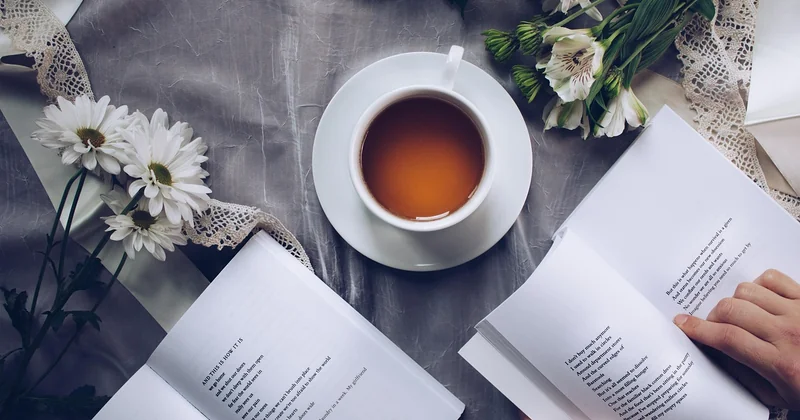
- William Carlos Williams, whose poems are deceptively simple and endlessly instructive.
- Mary Oliver, who wrote about nature with a directness that never sacrifices depth.
- Sharon Olds, whose physical, confessional poems are masterclasses in concrete imagery.
- Ocean Vuong, who pushes the boundaries of the form while keeping emotion at the center.
When you read these poets, don't just read for pleasure. Read actively. Ask yourself: why did this poet break the line there? How do they transition between stanzas? Where does the poem pick up speed, and where does it slow down?
The Wrong Reasons to Write Free Verse
Let me be blunt about something.
People sometimes choose free verse because they think it's the easy option. They don't want to learn meter, they don't want to count syllables, they don't want to wrestle with rhyme. They want to express their feelings without the bother of form.
That attitude produces terrible poetry. And worse, it gives free verse a bad name. A poem that is nothing but chopped-up prose with vague, sentimental language is not a free verse poem. It's a failure wearing a costume.
I've been guilty of this myself. In my early twenties, I filled notebooks with "free verse" that was really just journaling with unjustified margins. It took years of reading, writing, and revising before I understood that free verse is a discipline, not an escape hatch.
If you're drawn to free verse because you love its possibilities—the way it can mimic the rhythms of speech, the way it can juxtapose images without transitions, the way it can build a structure that feels inevitable yet surprising—then you're in the right place. Write boldly. Revise mercilessly. The form will reward you.
And if you're writing free verse for any other reason, ask yourself what you're actually trying to say. Then figure out the best form for saying it. It might not be free verse at all.
A Final Word
The writer of the Psalms in ancient Hebrew used a kind of free verse—no fixed meter, no rhyme, just rhythm built on parallelism and breath. It's the oldest poetry we have, and it still moves people today. That's the power of this form. It goes straight for the breath and the ear.
Your first free verse poem will probably be rough. Mine was embarrassing. Your tenth will be better. Your fiftieth might be something worth keeping.
The blank page is not your enemy. It's just waiting for you to make the first move.
So make it. Write a single line. Then another. Let the poem find its shape, one word at a time.
Key Takeaways
- Free verse isn't "easier" than formal poetry—it requires you to supply your own structure and discipline.
- Start from a concrete image or moment, not from an abstract idea about your subject.
- Line breaks are your most powerful tool: each one creates emphasis, pause, and rhythm.
- Vary your line lengths. Monotonous lines make monotonous poems.
- Read every draft aloud. Your ear will tell you what your eyes can't see.
- Revision is where the real poem gets written. Be brutal in cutting what doesn't work.
- Study poets like William Carlos Williams, Mary Oliver, Sharon Olds, and Ocean Vuong to learn what the form can do.