Here’s the thing: we’ve never had more access to stories, and yet we’ve never been more disconnected from the ones that built the very grammar of how we tell them.
I spent most of my twenties avoiding the classics. I thought they were homework. A chore. A dusty punishment from professors who enjoyed watching eighteen-year-olds drown in Victorian syntax. I read genre fiction, contemporary thrillers, and whatever was trending on social media. It was comfortable.
Then a friend shoved Middlemarch into my hands. I groaned. But somewhere around page 200, it clicked—and it wasn’t the plot. It was the recognition. A woman in 1871 was having the exact same crisis of ambition and marriage that my peers were having in their group chats. That moment rewired something in my brain.
Classic literature still matters today because it provides a shared vocabulary for the human condition that no algorithm can replicate. It isn’t about nostalgia or academic gatekeeping. It’s about realizing that the problems we consider uniquely modern—burnout, loneliness, political polarization, the fear of a wasted life—have been chewed over by sharper minds than ours for centuries. Let me show you why that matters, and how to actually get past the barriers that keep you from enjoying it.
Key Takeaways
- Classics offer a rare form of cognitive resistance in an age of instant gratification, slowing down your thinking rather than just entertaining it.
- The value compounds with age: rereading a classic at 35 is a fundamentally different experience than reading it at 18.
- You don't need to read in chronological order or finish every book you start; the "great conversation" is a dialogue, not a syllabus.
- Modern adaptations and well-chosen translations serve as legitimate bridges into difficult texts, not as cheats.
- The real barrier to entry is rarely intelligence; it's outdated language and a lack of contextual scaffolding.
Why Classic Literature Still Matters Today (and Why It Feels Like Work)
Let’s be honest about the first hurdle. "Why classic literature still matters today" is a question asked by people who have attempted Moby-Dick and failed. Or who bought a leather-bound set of Dickens and let it gather dust. The guilt is real.
I’ve been there. The prose feels dense. The references feel obscure. You read a paragraph twice and still can't figure out what the butler is doing. It’s easy to conclude that these books are overrated relics. But here's a hard truth I learned after forcing myself through The Brothers Karamazov: difficulty is not the enemy of meaning; it is the vehicle for it.
We live in a media environment engineered for frictionless consumption. Social media feeds, streaming episodes, and news briefs are designed to be swiped past. Classic literature is the exact opposite. It resists you. It asks you to slow down. In an era of keyboard-triggered dopamine, sitting with a sentence that demands to be reread is not just an intellectual exercise—it is a form of cognitive resistance.
Why Do I Only Read Classics? (The Trap of the Purist)
Some readers go the other way. They abandon modern fiction entirely, declaring that only dead authors have any depth. I went through this phase too, and I’ll admit it makes you obnoxious at dinner parties.
The argument is usually that contemporary books are formulaic. There's some truth to the fact that market-driven publishing pushes safe bets. But a diet of only classics leads to a kind of intellectual calcification. You start to mistake the style of the past for substance.
The rush you get from a classic isn't because it's old. It's because it's good. And goodness isn't exclusive to a specific century. If you only read classics, you miss out on writers who are conversing with those classics right now, updating them, pushing back against their blind spots. To read only the old masters is to walk into a conversation halfway through and refuse to listen to the people speaking in the present tense.
Are Classic Books Worth Reading? A Cost-Benefit Analysis
Yes—but only if you correct for survivorship bias.
Here is the dirty secret of the literary canon: survival is not purely about quality. It's about luck, preservation, and cultural power. For every Pride and Prejudice that survived, there are thousands of equally well-written novels by authors who were women, people of color, or simply poor, whose books rotted in archives or were never printed.
So, are they worth it? Statistically, the books we call classics have a higher density of "aha" moments per page than the average bestseller. They have survived because multiple generations of readers, translators, and critics found something worth keeping.
However, individual classics are not all equal. Don Quixote feels modern; Pamela feels like watching paint dry. The return on investment comes when you find the specific books that speak to your situation. For me, Anna Karenina explained why intelligent people stay in bad relationships. The Great Gatsby explained the emptiness of the "hustle culture" I see online every day. That utility is the metric that matters, not the prestige of the binding.
Are Classics So Hard to Read? (The Barrier of Language)
This is the elephant in the room. "Are classics so hard to read?" Yes. But usually, it’s not the ideas that are hard—it’s the vocabulary and the syntax.
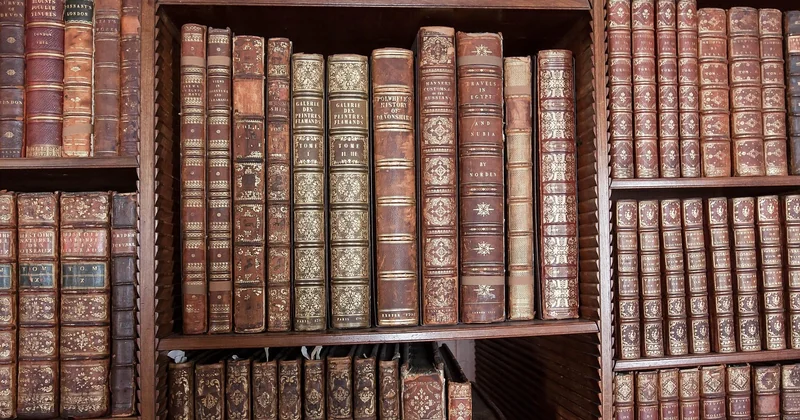
I remember picking up Wuthering Heights and feeling like I needed a translator. The problem isn't your attention span. The problem is that language is a moving target. Words shift meaning. Sentence structures that were breathlessly modern in 1847 now feel like tangled brambles.
The solution isn't to grit your teeth. It’s to find the right edition. This was a game-changer for me:
- Annotated editions (like the Norton Critical editions) provide footnotes explaining historical context, slang, and references. They don't dumb the text down; they illuminate it.
- Modern translations are not just for foreign books. Works like Les Misérables or The Count of Monte Cristo have newer, more fluid translations that ditch the stiff Victorian English of older versions for something more energetic.
- Audiobooks help immensely. Hearing the rhythm of the prose is often easier than decoding it visually. A good narrator can make Dickens feel like a one-man theater show.
The goal is to get past the initial "parsing" phase. Once you stop wrestling with the grammar, you can start wrestling with the ideas. And believe me, the ideas are worth the fight.
What Are Considered the Classics in Literature? (The Missing Perspectives)
When we ask "what are considered the classics in literature," the default answer is usually a list of dead white European men. That list is the problem.
The "Western Canon" was codified in universities during the late 19th and early 20th centuries. It was a bureaucratic tool, not a divine decree. It elevated certain works to define a certain type of cultural education—often while excluding the voices of women and colonized peoples.
However, look a little closer, and the "classic" label stretches far beyond the old guard. A classic is any book that speaks to a fundamental truth about human nature with enough power to transcend its original context.
That means we can call:
- Things Fall Apart by Chinua Achebe a classic for its devastating look at colonialism.
- Their Eyes Were Watching God by Zora Neale Hurston a classic for its celebration of Black womanhood and vernacular speech.
- One Hundred Years of Solitude by Gabriel García Márquez a classic for redefining how we perceive time and memory.
Once you expand the definition, the "why it matters" becomes even clearer. We don't read a literary canon to worship it. We read it to see the world through multiple lenses. We need the perspective of a 19th-century Russian aristocrat and the perspective of a 20th-century Nigerian villager to even begin to comprehend the full palette of human possibility.
Classic Books That Hold Up (And How to Find Them)
Not all classics age well. Some are historically interesting but emotionally inert. When people ask me for "classic books that hold up," I steer them toward texts that feel contemporary in their psychological complexity.
Here is my rule of thumb: Choose a classic that is driven by internal conflict rather than external plot. Modern readers are used to character-driven stories. So, skip the complicated military campaigns in War and Peace if you want; instead, read the sections about Pierre’s existential crisis—that part is shockingly modern.
Start with books that are relatively short and have a strong narrative voice. Try:
- The Vegetarian by Han Kang (soon to be a classic, if not already).
- Frankenstein by Mary Shelley (the prose is dense but the story is a thriller).
- The Stranger by Albert Camus (short, crisp, and devastatingly relevant to discussions about apathy).
A mistake I made early on was trying to read chronologically. I started with ancient Greek tragedies and burned out. You don’t have to read in order. Jump to whatever era grabs your interest. The "great conversation" between books is not linear; it’s a web.
How to Read the Classics: Practical Advice from My Own Failures
I’ve mentioned that I failed at major classics for years. Here’s what finally worked. It’s not magic; it’s just a shift in strategy.
Don't force the finish line. I used to be a completionist. If I started a book, I had to finish it, or I felt like a loser. That mindset ruined reading for me. I would drag myself through 500 pages of a book I hated, get to the end, and realize I had retained nothing.Now, I allow myself to quit. But I quit smart. If I’m reading a book by Tolstoy and I’m bored, I don't close the book forever. I skip ahead. I read the Wikipedia summary of the chapters I missed to get the plot, and then I jump back in for the character moments.
The 50-page rule is a myth. Some classics take 150 pages to warm up. Middlemarch doesn't get good until page 100. The key is to use a secondary source to help you over the hump. Before I start a heavy book now, I watch a summary video or read a spoiler-free analysis of the first few chapters. Knowing the family tree of the characters in One Hundred Years of Solitude before I start isn't cheating—it's survival.Spoiler alert: You should also read the last page first.
I know, it sounds like heresy. But I’ve found that knowing the destination makes the journey less stressful. If I know where the characters end up, I stop worrying about "what happens" and start paying attention to how the author gets them there. The prose becomes the focus, not the plot.
Why Read the Classics (Summary of My Argument)
If you distill it down, the argument for reading old books in 2026 is not about tradition or tests. It’s about intellectual humility.
We are trapped in the present. We think our anxieties are unique. We scroll through our feeds and feel a sense of unprecedented chaos. But reading classics is a corrective lens. It shows you that:
- Every generation thought civilization was collapsing.
- Every generation felt alienated from the younger/older crowd.
- Every individual wrestled with how to live a meaningful life in the face of inevitable death.
That realization breeds a kind of calm. It doesn't trivialize our problems, but it puts them in perspective. When I read the letters of Cicero or the journals of Virginia Woolf, I realize that the "human condition" isn't a phrase; it's a shared burden.
Classic literature is not escapism. It's the opposite of escapism. It is a confrontation with the deepest realities of our existence. By reading about Elizabeth Bennet’s prejudice or Hamlet’s indecision, we learn to see ourselves more clearly.
The final argument I’ll make is this: the classics are the only place where you can have a conversation with the dead. You get to ask them what they thought about love, power, and death—and because they are brilliant and articulate, you get an answer better than anything you'd find on a modern forum.
Conclusion: A Living Voice, Not a Museum Piece
So, do we really need these books? I think we need them more than ever. In a culture that moves so fast it forgets its own history every three news cycles, the classics serve as an anchor. They slow time down.
They won't give you easy answers. In fact, they’ll probably complicate things. But that's the point. We don't read to have our biases confirmed; we read to have them dismantled.
Pick up a book that scares you. Find a translation that breathes. Read it without the pressure of the "Great Books" checklist.
You aren't checking a box; you're joining a conversation that has been going on for thousands of years. And once you get past the initial awkwardness of the language, you'll realize they are speaking directly to you.