Beyond the Booker: The Contemporary Authors Actually Redefining Literary Fiction
Every few months, someone sends me the same listicle. "Ten contemporary authors you need to read," it promises, and then proceeds to name the same five white men from Brooklyn who all went to the same MFA program and write the same autofictional novel about their failing marriage. I'm not saying those books are bad. I'm saying they're not redefining anything.
Redefinition is a different beast. It's structural, not stylistic. It's about breaking the container, not just rearranging the contents.
I've been tracking this for over a decade now, and the pattern is clear: the authors actually changing what literary fiction can do are rarely the ones topping the bestseller charts. They're the ones making critics uncomfortable, the ones whose books don't fit neatly into the "literary" or "genre" shelves, the ones forcing us to rethink what a novel even is.
Here's the thing: literary fiction in the 21st century has a problem. The traditional novel—linear plot, single protagonist, tidy resolution—was built for a world that no longer exists. And the writers I keep coming back to are the ones who've figured out how to dismantle that machinery from the inside.
What "Redefining" Actually Means (It's Not Just Good Writing)
Let me be blunt. A well-crafted sentence isn't innovation. A moving story isn't redefinition. Those are baseline requirements.
What I'm talking about is formal disruption. The authors below are doing things with narrative structure, point of view, and genre boundaries that would have been unthinkable twenty years ago. They're not just telling stories—they're questioning the very architecture of how stories get told.
Some of them are using non-linear structures that mirror trauma's refusal to obey chronology. Others are blending speculative elements into literary realism so seamlessly that the old genre labels become meaningless. A few are building what I can only describe as "novels in fragments"—polyphonic works that read less like a single author's vision and more like a chorus of competing voices.
None of this is new, you might say. And you'd be right. But there's a difference between experimental writing that alienates readers and experimental writing that expands what readers can feel and understand. The best contemporary authors have figured out the difference. The distinction matters enormously, and it explains why certain formally ambitious writers get embraced while others remain curiosities for academics.
Let me give you concrete names.
Valeria Luiselli: The Architect of Collage
I'll admit, when I first picked up Lost Children Archive a few years ago, I had no idea what to make of it. The book alternates between a road-trip narrative, documentary fragments, Polaroid descriptions, and what appears to be an entirely separate novel nested inside the main one. It shouldn't work. It absolutely shouldn't work.

It works.
Luiselli's genius is that she never lets the formal play become the point. The fragmented structure serves a moral purpose—it mirrors how a family falls apart, how a national crisis (child migrants crossing the US-Mexico border) can feel both everywhere and nowhere, how stories multiply and contradict each other when you're trying to hold onto what's real.
Her earlier novel, The Story of My Teeth, is even weirder. It came with its own auction catalog, for heaven's sake. The novel was literally written in collaboration with workers at a juice factory in Mexico, and it's structured around the fictional biography of an auctioneer who sells his own teeth. I'm not doing it justice. The point is that Luiselli treats the novel as a flexible technology rather than a fixed form, and she makes that technology do political work.
What she proves: that experimental fiction doesn't have to be apolitical, and that political fiction doesn't have to be aesthetically conservative. For years I'd assumed those things were mutually exclusive. She's one of the writers who convinced me otherwise.Percival Everett: The Genre-Bender Who Keeps Winning
Okay, spoiler alert: whatever I say about Percival Everett is going to be outdated by the time I finish this sentence. The man publishes so much that critics have essentially given up on "comprehensive" assessments of his work. But his recent streak has been absolutely unmatched.
James, his reimagining of The Adventures of Huckleberry Finn from the perspective of the enslaved man Jim, demonstrates exactly what redefinition looks like. On the surface, it's a "revision" of a classic—a well-worn genre in itself. But Everett does something far more radical than simply giving Jim a voice. He takes the vernacular that Mark Twain used—the dialect that literally minstrelized Jim—and weaponizes it as a mask. His Jim speaks in what the white characters expect to hear, but readers become privy to his actual thoughts.That's not merely clever. It's a formal argument that the way American literature has represented Black speech is inseparable from how it has represented Black minds.
Then there's The Trees, which somehow manages to be both a brutal satire of lynching and a genuinely gripping detective novel. The tonal whiplash should be incoherent. Instead, it's devastating.
What he proves: that genre boundaries are bureaucratic conveniences, not creative ones. Everett writes "literary fiction" that's funnier, more suspenseful, and more formally daring than most genre novels—and he's been doing it for decades without ever getting comfortable.Yoko Tawada: The Translator of Worlds
Here's something that most American discussions of "contemporary fiction" completely miss: the language barrier. Tawada is a Japanese author who writes in both Japanese and German—not translated, but written in both languages. She's the rare case of an author who exists simultaneously in two literary traditions, and her work is obsessed with what gets lost and gained in that in-between space.
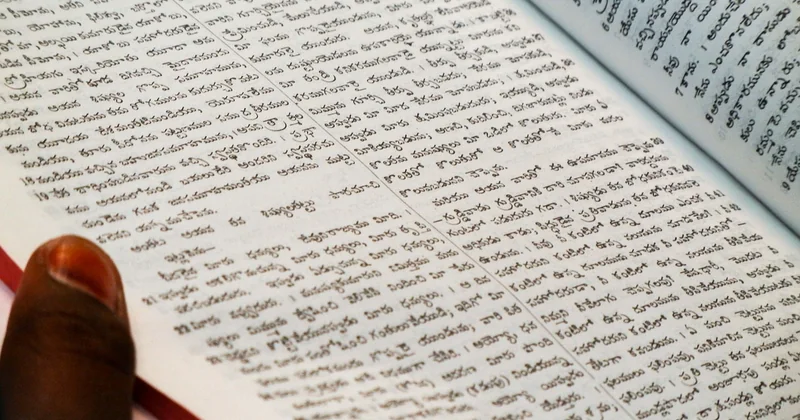
Her novel Scattered All Over the Earth imagines a not-too-distant future where Japan has disappeared (sunk into the sea, in a nod to climate change), and its diaspora speaks a new hybrid language. The book is narrated by a series of characters who are all searching for someone they remember differently. Translation becomes the central metaphor for human connection itself.
I should mention here that Tawada's work requires something from the reader. She doesn't prop you up. You have to be willing to follow her into odd, disorienting spaces and trust that the disorientation is the point.
What she proves: that literary fiction's future includes a genuinely global conversation—and that monocultural literary traditions are going to look increasingly provincial.A Note on the Awards System
Before you dismiss the authors above as obscure academic favorites, consider this: Everett won the National Book Award for James. Luiselli won the American Book Award. Tawada won the National Book Award in the translated literature category.
The awards system, for all its flaws, has started catching up with formal innovation. A decade ago, the National Book Award tended to favor accessible realism above all. Now, some of the most celebrated books of recent years are structurally adventurous works that would have been shelved as "experimental" in previous decades. This matters. Awards don't just validate what's good—they shape what publishers acquire, what bookstores stock, and what readers discover. If you look at shortlists over time, you can actually track the moment when formally daring fiction stopped being a niche. It wasn't one moment—it was a slow tide of change that gathered force over the last several years.
The Authors Working the Margins
Now, let me talk about a few names that probably won't appear in your typical "best contemporary authors" roundup. These are the ones I'd call "under-recognized," but the label feels wrong, because several of them have serious critical backing. It's more accurate to say they're under-read relative to their achievement.

Laurent Mauvignier (France)
Mauvignier is a French novelist whose epic The Birthday Party (published in English as During the Dance) unfolds over the course of a single evening and runs past 400 pages. The entire novel takes place during an old man's birthday celebration in a French village, and the entire thing is written in a present tense that feels almost hallucinatory. Nothing "happens" in the conventional sense, and yet the tension is unbearable. He's one of the finest living stylists in French literature, and his method—taking an almost impossibly small temporal window and expanding it through obsessive attention—makes most thriller writers look lazy.
Jenny Erpenbeck (Germany)
Erpenbeck's Kairos won the International Booker Prize, but she's still less known in the US than her achievement warrants. Her approach: she writes novels that operate simultaneously on the scale of an individual life and the scale of European history. Kairos does this by intertwining a passionate affair with the collapse of East Germany. The novel alternates between a young woman and an older man—before, during, and after their relationship—and the political shifts of late-1980s Berlin bleed directly into the emotional drama in ways that never feel forced.
Andrés Barba (Spain)
Barba doesn't write long novels. His best work—Such Small Hands, A Luminous Republic—are compact, almost novella-length, and they're so tightly controlled that every sentence seems to have been placed with surgical precision. His recurring subject is childhood, and he writes about children with a disturbing intensity that avoids both sentimentality and cynicism. In A Luminous Republic, a group of children who have mysteriously appeared in a South American town begin to form their own parallel society. The novel reads like a parable, but refuses to resolve into one.
What these three share is an understanding that reduction can be as radical as expansion. Mauvignier's maximalism is about slowing time down until you can see inside its cracks. Erpenbeck's historical sweep is always grounded in bodily intimacy. Barba's brevity is a form of compression that makes every word carry weight.
Why You Should Care About These Specific Writers
I want to suggest something that might sound counterintuitive: the authors most likely to "redefine" literary fiction are not necessarily the ones writing the most revolutionary work right now. They're the ones whose methods open doors for others. Redefinition happens through influence and imitation.
Luiselli's collaging technique has already influenced a generation of younger Latinx writers. Everett's genre-bending has made it legitimate to write satirical detective novels that are also serious investigations of racial violence. Tawada's bilingual method has opened up questions about what it means to write in a globalized literary marketplace.
Here's a question I get asked a lot, and it's a fair one:
"Who are the famous contemporary English-language authors I should read first?"
If you're looking for the most influential living writers in English, the list looks like this: Marilynne Robinson for her philosophical depth and prose precision, Colson Whitehead for proving that genre fiction can win the Pulitzer twice without losing literary credibility, and Zadie Smith for her restless formal versatility—she's gone from comic realism to historical fiction to autofiction without ever repeating herself.
But if you want a shorter starting list for "redefinition," start with James by Percival Everett. It ties everything together: the formal experiment, the genre bending, and the cultural stakes. It's also a reading experience that makes you rethink a book you thought you knew.
The Global Novel Is the Future
One last point, and I think it ties all of this together. The most exciting work in contemporary literary fiction is increasingly coming from writers who move between cultures, languages, and traditions. Tawada's bilingual practice, Erpenbeck's East German background, Mauvignier's Frenchness rendered in obsessive detail—these aren't exotic decorations. They're structural elements of how these writers understand the world.
When a French novelist writes a 400-page novel about a single evening in a village, he's working within a tradition. When a Japanese author writes in German about a disappeared Japan, she's actively dismantling the assumption that national literatures are self-contained boxes.
The search terms and recommendations I see online keep asking for "famous contemporary authors," a phrase that implicitly assumes a shared cultural reference point. But the contemporary moment is defined by the absence of that shared reference point. The canon, such as it was, has fragmented.
And that's a good thing. The fragmentation is what makes space for new forms, new voices, and new ways of thinking about what fiction can do.
I'll leave you with this: the definition of "literary fiction" has never been stable, and it's being stretched more aggressively right now than at any point in my reading lifetime. The authors above are the ones doing the stretching.
The question is whether readers are willing to stretch with them.